Your Budget Isn't a Number. It's a Range.

And the range is probably wider than you think.

A bathroom can cost $5,000 or $75,000.

Both numbers are real. Both describe a project a Columbus homeowner finished last month. The gap between them is not a mystery, and it is not about contractors padding their bids. It is about scope, materials, labor intensity, and what happens behind the walls when demolition begins.

The national average for a bathroom renovation in 2026 sits around $16,500, with most homeowners spending between $8,000 and $45,000 depending on size, finish level, and region. A small cosmetic refresh starts around $6,000. A full luxury primary bath with layout changes, custom millwork, and stone surfaces routinely exceeds $60,000.

The reason the range is so wide is that "bathroom renovation" describes anywhere from a weekend of new fixtures to a six-week reconstruction involving five trades, a structural engineer, and a city permit office. Same words. Completely different projects.

This page walks through how that works — in plain terms, with real Columbus numbers. The full breakdown, with every source cited, lives in our cost guide, and the bathroom estimator lets you move the sliders yourself.
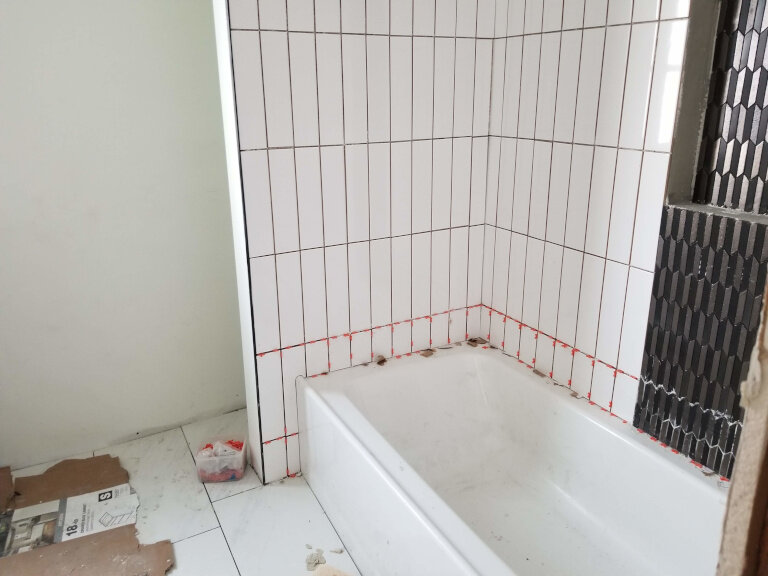
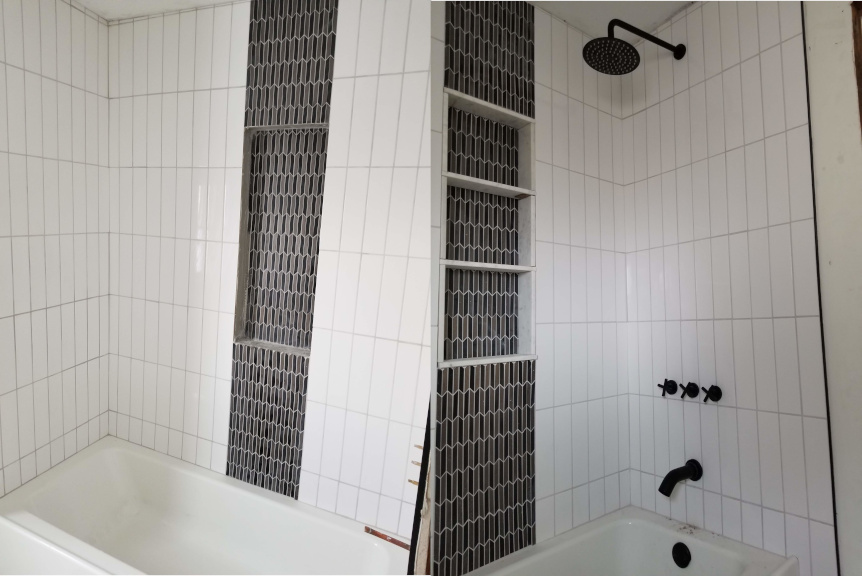
Columbus bathroom mid-renovation

The Same Bathroom, Four Ways

Most bathroom projects land in one of four investment tiers. The labels matter less than what is actually inside each one — what work gets done, what materials get selected, and what you walk into when the project is finished.

TierWhat's includedRange
Cosmetic RefreshPaint, new faucet/showerhead/toilet, off-the-shelf vanity, LVP or basic tile, tub refinishing$6K – $12K
Mid-RangeGut to studs (layout stays), new vanity + quartz, tub-to-shower conversion, porcelain tile, fan, lighting$15K – $30K
High-EndLayout changes, frameless shower with bench, custom vanity, stone tile, designer fixtures, heated floor$35K – $65K
LuxuryReconfigured footprint, custom wet room, freestanding stone tub, book-matched stone, custom millwork, smart systems$65K – $150K+

Same room category. A 25x swing from top to bottom. The Cost vs. Value Report puts the national average for a mid-range bathroom at roughly $25,251 with about 74% resale return — one of the highest of any interior remodeling project.

The tier that fits you depends on how long you plan to stay, what the existing layout actually does well or badly, and whether daily comfort or resale math is driving the decision.

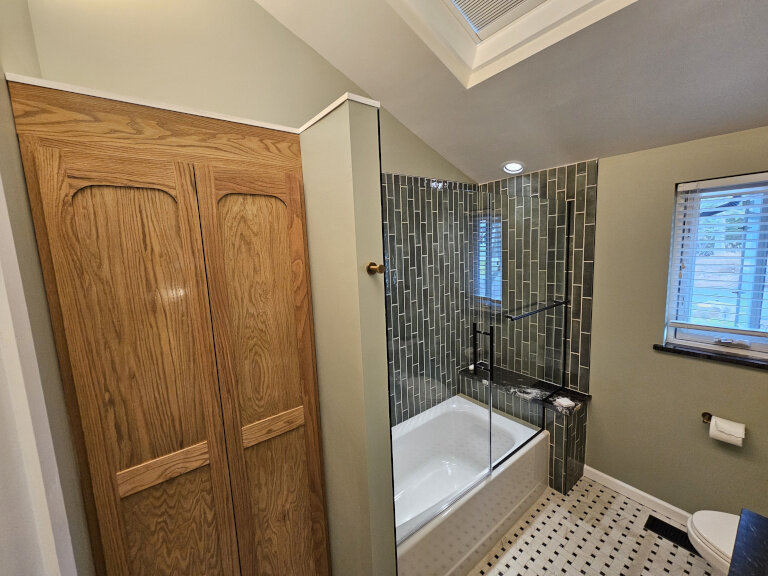
Completed Columbus bathroom renovation

The Three Biggest Cost Levers

Six factors do almost all the work in setting a bathroom's final price. These three move the most money, and they're the ones homeowners most often underestimate.

1

Whether the plumbing moves

This is the single largest cost lever, and most homeowners underestimate it. Moving a toilet, shower drain, or vanity to a new spot on the floor plan can add $5,000 or more before any finishes are selected.

Once drains and supply lines are rerouted, labor hours climb, additional permits are required, and the chance of uncovering hidden issues in the existing rough plumbing goes up sharply.

Keep the plumbing where it is and you keep the budget predictable. The same dollars that would have paid a plumber to relocate a drain can instead pay for better tile or a higher-grade vanity.

2

Material grade

The same fixture category can swing by a factor of ten. A stock vanity from a big-box store runs about $400; a custom solid-wood vanity with soft-close drawers and a quartz top can exceed $4,000. A standard alcove tub costs a few hundred dollars; a freestanding cast-iron soaking tub can pass $5,000 before installation.

Tile follows the same pattern. Builder-grade ceramic at $3 per square foot and hand-cut marble mosaic at $40 per square foot both cover a wall. The wall functions the same. The room reads completely differently, and so does the invoice.

Finishes typically account for 30–45% of a bathroom budget — the largest controllable spend in most projects.

3

The age of the home

Renovating a bathroom built before 1980 carries a near-certain risk of finding something behind the walls that requires repair. Old galvanized or cast-iron pipes, knob-and-tube wiring, water-damaged subfloor under a tub that has been leaking for a decade — none of these show up on a pre-renovation quote because none of them are visible until demolition.

Industry data: roughly 30% of bathroom remodels uncover damage behind walls or under flooring once demolition begins. That's why a 15% contingency reserve isn't optional — it's the most reliable cost-control tool in residential renovation.

Three more factors — labor mix, room size, and regional market — also move the number. See all six in the full guide →

Where a Mid-Range Bathroom Dollar Actually Goes

For a $25,000 mid-range Columbus bathroom, the budget commonly breaks down like this:

CategoryShare of budget
Labor (all trades)40–50%
Cabinetry & counters12–16%
Fixtures & faucets10–14%
Tile & flooring material8–12%
Shower or tub (incl. glass)6–10%
Lighting & ventilation4–6%
Permits, design, PM3–5%
Contingency10–15%

Inside a luxury project, labor climbs to 50–60% because the work is more complex, and design + project management can reach 8–12% because the planning effort is meaningfully greater.

The contingency line is the one clients most want to skip and most often need. A 10–15% contingency isn't padding — it's the buffer that keeps a surprise from turning into a crisis.

Mid-project bath framing and mechanicals

Why Your Neighbor's Number Isn't Your Number

Two houses on the same block can finish identical-sounding bathroom remodels with $25,000 of daylight between the final invoices. Even inside a single tier, the same renovation can vary by 20–30%. Three factors do most of the work:

  • Selection discipline. A high-end renovation can stay at $40K or drift to $58K depending on how many "small" upgrades get approved during the project. Designer hardware. Hand-laid mosaic in a shower niche. A second sconce. None of these are expensive on their own. All of them together commonly add 15–20%.
  • Contingency use. A project budgeted with a 15% contingency for hidden issues will either come in at the budget or use part of the reserve. A project budgeted with no contingency will exceed the budget the moment demolition uncovers anything.
  • The contractor's actual capability at the tier. A contractor whose typical work is mid-range will produce a high-end project that looks like an expensive mid-range project. Stone fabricators who book-match slabs, cabinetmakers who build to spec, tile setters who don't subcontract — these are a different set of people, and they price accordingly.

Read the full Bathroom Renovation Cost guide →

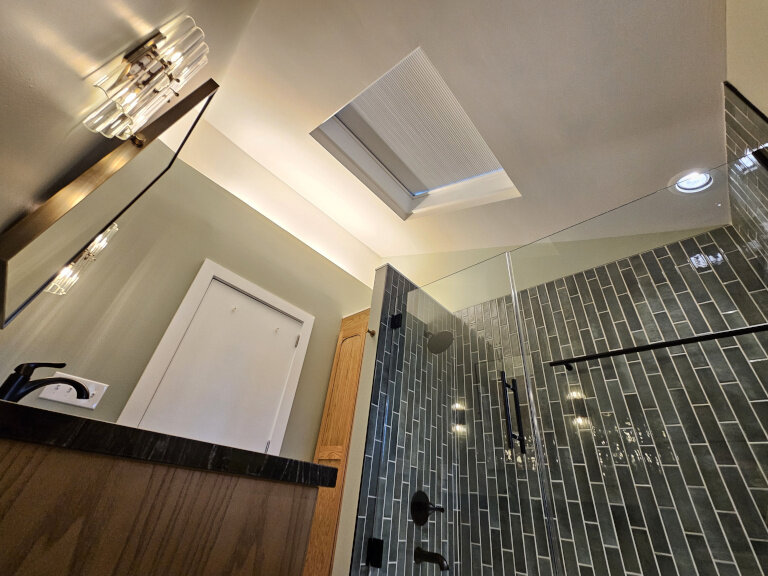
Finished Columbus bathroom renovation
Licensed & Insured
BBB A+ Rated
Top 3% Ohio
Columbus Local
MBE / EDGE Certified

Dig Deeper

Long-form guides on what actually drives bathroom renovation pricing in Columbus — with every source cited.

Start the Estimator